
[Interview Highlights with Honorary Doctor of MUST] Professor Krzysztof Palczewski: Making Inherited Blinding Diseases No Longer a Life Sentence
 Back
Back[Interview Highlights with Honorary Doctor of MUST]
Professor Krzysztof Palczewski: Making Inherited Blinding Diseases No Longer a Life Sentence
Professor Krzysztof Palczewski
Member of the U.S. National Academy of Sciences
Member of the U.S. National Academy of Medicine
Foreign Member of the Polish Academy of Arts and Sciences
Renowned Biochemist and Pharmacologist
2026 Honorary Doctor of Medicine of MUST
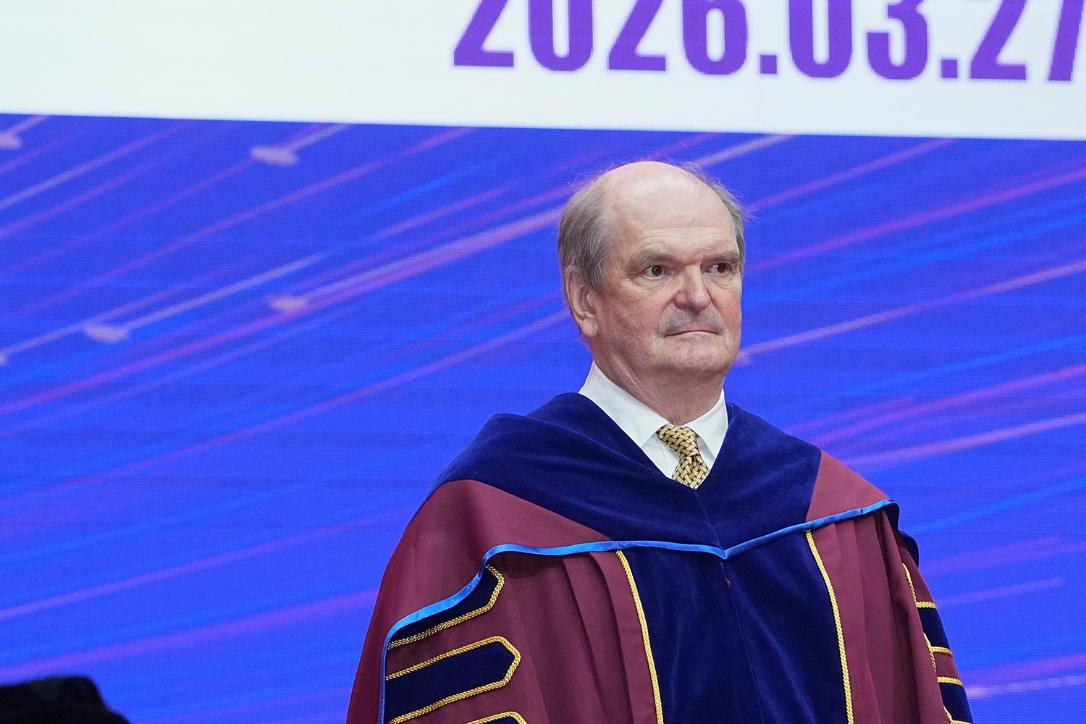
On the occasion of the 26th anniversary of Macau University of Science and Technology (MUST), Professor Krzysztof Palczewski, Academician of the U.S. National Academy of Sciences, Academician of the U.S. National Academy of Medicine, and Foreign Academician of the Polish Academy of Arts and Sciences, was awarded the 2026 “Honorary Doctor of Medicine” degree by MUST.
Professor Krzysztof Palczewski is an internationally renowned Polish-born American biochemist and pharmacologist, and one of the world’s leading vision researchers. His work has fundamentally advanced the understanding of visual mechanisms and the development of treatments for eye diseases.
[From Decoding the “Crown Jewel” to Answering the Call of Life: Palczewski’s Journey of Truth-Seeking and Translation]
Professor Palczewski’s scientific achievements are inseparable from rhodopsin, the “crown jewel” of biochemistry. Since its discovery in the 1850s, rhodopsin has remained a focal point in academia, yet exploration was long limited to indirect observation. “To understand the function of rhodopsin, we must first understand its structure,” he explained. Leading his team, Professor Palczewski was the first in the world to achieve high-resolution three-dimensional structural determination of rhodopsin. This breakthrough not only enabled precise visualization of a single molecule but also provided critical insights into the vast G-protein-coupled receptor (GPCR) family, which comprises approximately 600 receptors involved in nearly all physiological processes in the human body. The study established rhodopsin as a model system for global GPCR research, contributing to multiple Nobel Prizes in the field of signal transduction and reshaping modern drug discovery at the molecular level.
After solving the structural challenges and elucidating the mechanisms of signal transduction, Professor Palczewski faced a pivotal career decision: to continue deepening research within his existing achievements or to cross boundaries into the more challenging realm of clinical application. Ultimately, driven by his commitment to advancing the frontiers of science and pursuing the true essence of life, he resolutely turned his focus toward translational research in vision restoration.
In his view, the core of scientific exploration lies in the pursuit of truth, and the ultimate purpose of that pursuit should be to give back to society and benefit humanity. At an academic conference, a mother on the verge of blindness due to a rhodopsin mutation told him: “You may not be able to help me, but please look at my son over there—he has the same mutation; perhaps you can help him.” These words made him realize that a scientist’s responsibility should not stop at “verifying the truth or falsity of hypotheses,” but must extend to answering humanity’s hopes for survival and igniting hope for patients. It is this belief in “seeking truth for the sake of people” that has guided him to continuously push technological boundaries, striving to ensure that inherited blinding diseases are no longer a “life sentence” for patients.
[Message to the Younger Generation: Embrace the Future of Science Amid Technological Iteration]
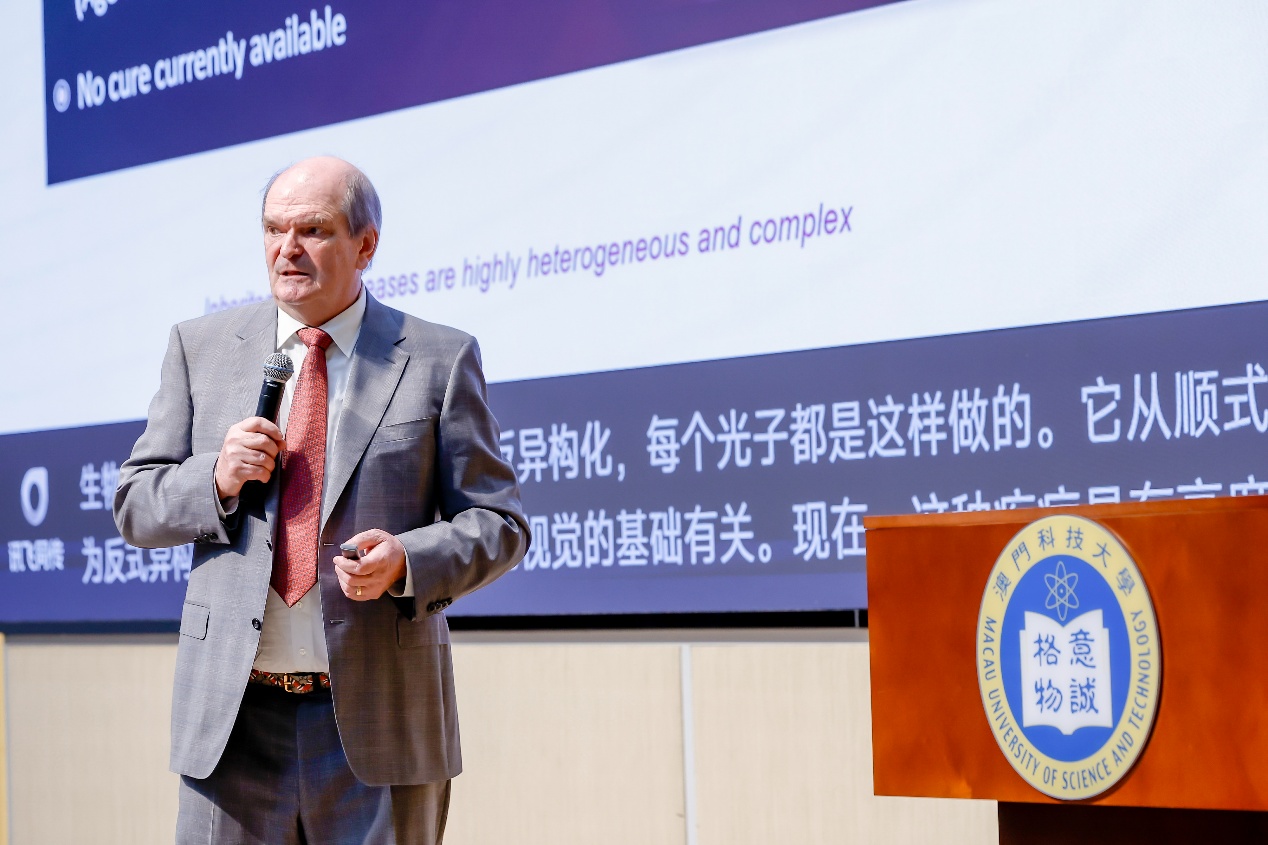
Standing at the crossroads of rapid technological iteration, Professor Palczewski encourages young scholars that only a solid scientific foundation can bear the weight of innovation. He vividly compares scientific research to competitive sports such as volleyball and basketball: “You must achieve the highest level of expertise in a certain field and derive pure joy from it.” This “expertise” is not about being insular, but rather the confidence needed for interdisciplinary innovation. He believes that only by delving deeply enough into foundational disciplines can one maintain independent judgment amid complex technological waves. “Not everything new is good. We must actively embrace those technologies that can truly advance the field.”
[Message to MUST: Rooted in the Greater Bay Area, Reaching the World]
Speaking about Macau University of Science and Technology, Professor Palczewski offered high praise: “I have no doubt that this university has an extremely bright future.” He remarked, “I see the youth and vitality here—students can learn from outstanding academicians while incorporating new technologies, new ideas, and new perspectives. This combination will bring forth the next generation of discoveries and talents. For all young people, it is important to join a continuously growing organization. And MUST is precisely such a place.” As the Guangdong-Hong Kong-Macao Greater Bay Area advances into deeper development, this bold and pioneering academic atmosphere will surely attract more top research talents to converge, contributing more Macao-originated, globally influential innovative solutions to the field of vision science.