
[Interview Highlights with Honorary Doctor of MUST] Professor Yuk Ming Dennis Lo: The Path of Scientific Research Lies in Persistence and Exploration
 Back
Back[Interview Highlights with Honorary Doctor of MUST]
Professor Yuk Ming Dennis Lo: The Path of Scientific Research Lies in Persistence and Exploration
Professor Yuk Ming Dennis Lo
Vice-Chancellor and President, The Chinese University of Hong Kong
Li Ka Shing Professor of Medicine, The Chinese University of Hong Kong
Academician of the Chinese Academy of Sciences
Foreign Member of the Academia Europaea
2026 Honorary Doctor of Medicine of MUST
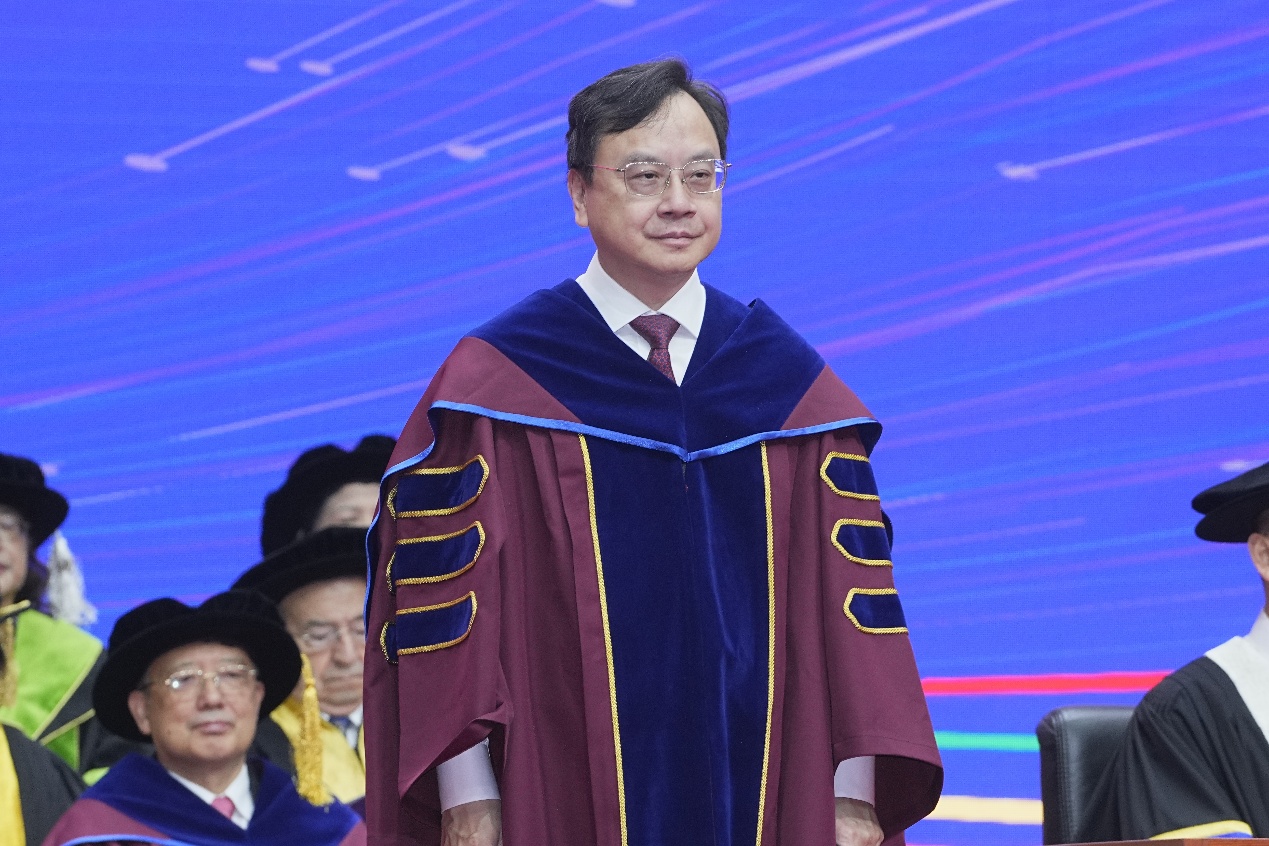
On the occasion of the 26th anniversary of Macau University of Science and Technology (MUST), Professor Yuk Ming Dennis Lo, Academician of the Chinese Academy of Sciences, Foreign Academician of the European Academy of Sciences, President of The Chinese University of Hong Kong, Li Ka Shing Professor of Medicine at The Chinese University of Hong Kong, and internationally acclaimed “Father of Non-Invasive Prenatal Testing,” was awarded the 2026 Honorary Doctor of Medicine degree by MUST.
[The Long March of Non-Invasive Liquid Biopsy Research: My Inspiration Came from a “Relaxed Moment”]
Professor Yuk Ming Dennis Lo’s scientific journey began during his studies at the University of Oxford. At that time, “amniocentesis” was the primary method for prenatal testing. Professor Lo believed that, for a fragile fetus, even minimally invasive procedures carried certain risks, and a safer alternative should be found.
“I came across an article stating that tumor-derived free DNA could be found in the plasma of cancer patients. I thought that fetal growth in the mother’s body is in some ways similar to tumor growth in a patient’s body. Could fetal DNA also be present in maternal plasma?”
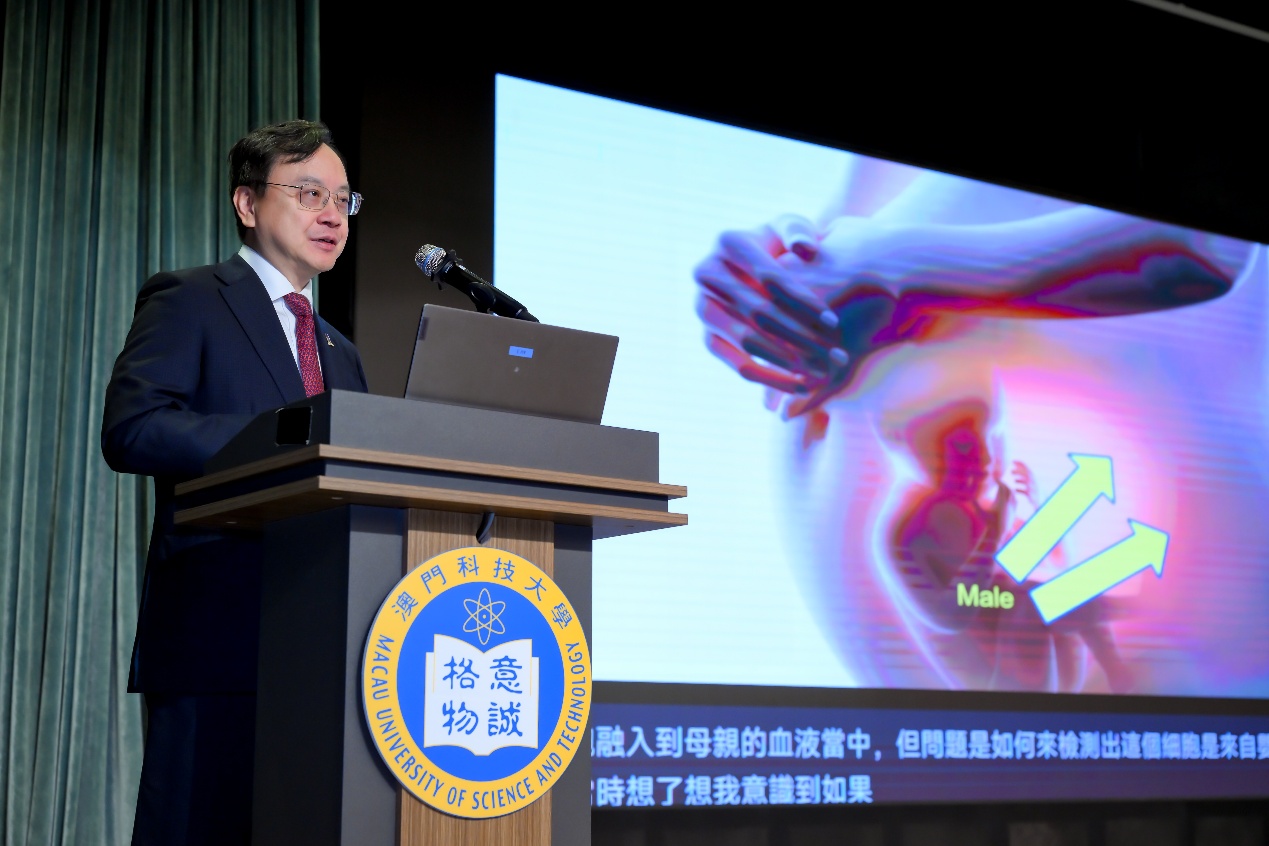
In 1997, inspired by the cooking method of instant noodles, he successfully detected Y-chromosome sequences unique to male fetuses from boiled maternal plasma. This was the first time internationally that the presence of fetal DNA in pregnant women’s plasma was confirmed, laying the scientific foundation for non-invasive prenatal diagnosis. He subsequently shifted his research focus to developing new diagnostic methods based on this technology, with the most representative achievement being the development of a non-invasive test for Down syndrome.
“We tried many approaches — physical separation, labeling, epigenetic modifications, and more — but none yielded satisfactory results. It was not until 2008, when we adopted high-throughput sequencing (NGS), that we finally succeeded.”
After completing the development of the non-invasive test for Down syndrome, Professor Lo did not stop there. He sought to push the limits of non-invasive prenatal diagnosis — to obtain the fetus’s entire genome map.
Fetal DNA in maternal plasma exists in fragmented form, making it extremely difficult to extract completely. “At first, I wondered if the problem could be solved with a single equation, but no matter how I thought about it, it didn’t work. One day, while watching “Harry Potter and the Half-Blood Prince” in the cinema wearing 3D glasses, the 3D English letter ‘H’ flew out from the opening credits. Suddenly, it became clear to me. Each fetal chromosome comes one from the father and one from the mother — perhaps we needed to distinguish between paternal and maternal origins? Perhaps two equations were required?”
Following this insight, Professor Lo’s team successfully assembled a high-precision whole-genome map of the fetus in 2010. The results were published in the prestigious journal “Science Translational Medicine”, widely reported by global media, and sparked intense ethical discussions. Professor Lo cautioned: “Through prenatal genetic sequencing, we can indeed obtain a great deal of information, but it is best to tell pregnant women only what they truly need to know during pregnancy.”
While advancing non-invasive prenatal testing, Professor Lo has also devoted himself to cancer detection research. In recent years, his team has successfully applied DNA sequencing technology to cancer detection, using non-invasive methods to identify multiple types of genomic alterations in cancer genomes, propelling cancer liquid biopsy into the whole-genome era.
[Insights on Scientific Research: Fear No Difficulty and Strive to Be the “First”]
We gain through the process and persevere with passion. Every breakthrough is built on decades of unwavering persistence and dedication. When asked about the charm of scientific work, Professor Lo replied: “The possibility of being the first person in human history to observe a certain phenomenon or invent a certain technology is itself fascinating.”
[Message to MUST Faculty and Students: Seize the Opportunity and Ride the Momentum]
On the occasion of the 26th anniversary of Macau University of Science and Technology, Professor Lo offered his blessings and expectations: “To all students at MUST, we are now living in a golden era of human science and technology. I hope you will seize the opportunities and push science and technology to new heights. To the leadership of MUST, congratulations on the 26th anniversary. I hope that, through the joint efforts of the university leadership, faculty, and students, the university’s global ranking will continue to rise.”