MUST confers 2026 Honorary Doctorate Degrees upon 7 Outstanding Individuals
 Back
BackThe Macau University of Science and Technology (MUST) is proud to confer the 2026 Honorary Doctorate degrees upon 7 outstanding individuals in recognition of their remarkable achievements in their respective professions and valuable contributions to the well-being of society. The conferment ceremony will be held during the MUST 26th Anniversary on March 27, 2026.
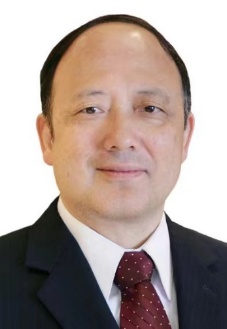
Chen Shiyi
Chen Shiyi is an Academician of the Chinese Academy of Sciences, a Fellow of the World Academy of Sciences (TWAS), and an internationally renowned expert in mechanics and physics. He currently serves as President of the Eastern Institute of Technology, Ningbo.
Professor Chen was among the first scholars from mainland China elected as a Fellow of the American Physical Society after the nation’s reform era and was later recognized as one of the “40 Influential Returnees in 40 Years of Opening-up.” He is widely acknowledged for his pioneering contributions to turbulence theory, computational fluid dynamics, and industrial software development, and as one of the founders of the international Lattice Boltzmann Method.
He earned his bachelor’s degree in mechanics from Zhejiang University in 1981 and completed his master's and doctoral studies at Peking University. His distinguished academic career includes service as Chair of Mechanical Engineering and tenured professor at Johns Hopkins University (United States), Founding Dean of the College of Engineering at Peking University, and Vice-President and Dean of its Graduate School. In 2015, he became President of the Southern University of Science and Technology (SUSTech), successfully advancing it into China's “Double First-Class” initiative. In 2021, he returned to Zhejiang to lead establishment of the Eastern Institute of Technology, Ningbo, where he continues to serve as President.
His research spans turbulence theory, large eddy simulation, subgrid-scale modeling, direct numerical simulation, multiphase flow and combustion physics, multiscale dynamic systems and multiscale computational methods, and industrial software.
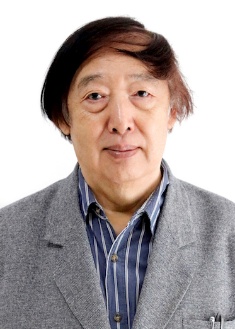
Feng Jicai
Professor Feng Jicai is a distinguished contemporary writer, painter, and cultural scholar and a member of the China Association for Promoting Democracy. He currently serves as Honorary Member of the China Federation of Literary and Art Circles, Honorary Chairman of the Chinese Folk Literature and Art Association, and Dean, Professor, and Doctoral Supervisor of the Feng Jicai Institute of Literature and Art at Tianjin University. He also chairs the Expert Committee for the National Intangible Cultural Heritage List and directs the China Traditional Village Protection Expert Committee.
Over the course of his career, Professor Feng has held numerous prominent positions, including Counselor of the State Council, Vice-Chairman of the Central Committee of the China Association for Promoting Democracy, Vice-Chairman of the China Federation of Literary and Art Circles, Chairman of the Chinese Folk Literature and Art Association, Member of the 6th to 12th National Committee of the Chinese People’s Political Consultative Conference (CPPCC), serving on its Standing Committee from the 9th to 12th sessions. He has also served as Deputy Director of the CPPCC Committee on Culture, History, and Learning, and Chairman of the Tianjin Federation of Literary and Art Circles.
Professor Feng’s professional journey began in athletics as a member of the Tianjin Men's Basketball Team (1961-1962), before transitioning to the arts as a painter at the Tianjin Heping Painting and Calligraphy Society (1962-1974) and the Tianjin Arts and Crafts Factory (1974-1975). He later taught at the Tianjin Arts and Crafts Workers’ University, and, from 1977, formally began his literary career at the Tianjin Cultural Bureau. He subsequently served as Vice-Chairman of the Tianjin Branch of the China Writers Association (1979-1988) and later as Chairman of the Tianjin Federation of Literary and Art Circles until 2013. Concurrently, he was Vice-Chairman of the China Federation of Literary and Art Circles (1988-2017) and Chairman of the Chinese Folk Literature and Art Association (2001-2016). Since 2005, he has dedicated himself to cultural research and education as Dean and Professor of the Feng Jicai Institute of Literature and Art at Tianjin University.
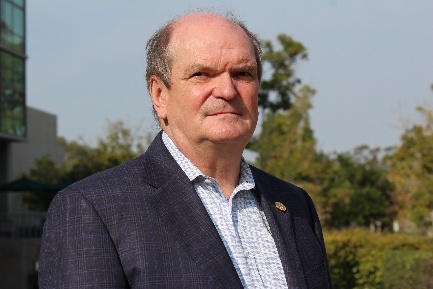
Krzysztof Palczewski
Professor Krzysztof Palczewski, PhD, is a Polish-born American biochemist and pharmacologist internationally recognized for his pioneering contributions to vision science and the treatment of ocular diseases. He is best known for elucidating the structures and functions of key proteins in the retinal visual cycle, foundational work that has advanced the understanding and treatment of inherited retinal degenerative disorders.
Professor Palczewski earned his master’s degree from the University of Wrocław in 1980 and his PhD from the Wrocław University of Science and Technology in 1986. He began his scientific career in the United States in 1986, holding academic appointments at the University of Washington and Case Western Reserve University, where he was awarded the title of Distinguished University Professor in 2016. In 2018, he joined the University of California, Irvine, as the Irving H. Leopold Chair of Ophthalmology and founded the Center for Translational Vision Research.
His groundbreaking research includes determining the high-resolution three-dimensional structure of rhodopsin, a discovery that transformed G protein-coupled receptor (GPCR) research; elucidating the structure and function of RPE65; and discovering retinosomes, specialized retinyl ester storage organelles in the retina. He has developed mouse models of blinding diseases such as age-related macular degeneration and Stargardt disease, pioneered systems pharmacology approaches to drug discovery, and more recently advanced gene-editing strategies, including adenine base editing (ABE), to correct pathogenic mutations and restore vision in animal models, offering new promise for the treatment of inherited retinal diseases.
Professor Palczewski is a Member of the United States National Academy of Sciences and the National Academy of Medicine, and a foreign member of the Polish Academy of Arts and Sciences. His numerous honors include the Cogan Award (1996), the Friedenwald Award (2014), the Bressler Prize in Vision Science (2015), the Paul Kayser International Award for Retina Research (2018), and the Goodman and Gilman Award in Receptor Pharmacology (2022). He is widely regarded as one of the world’s leading vision scientists, whose work has profoundly shaped both the understanding of visual mechanisms and the development of therapies for retinal diseases.
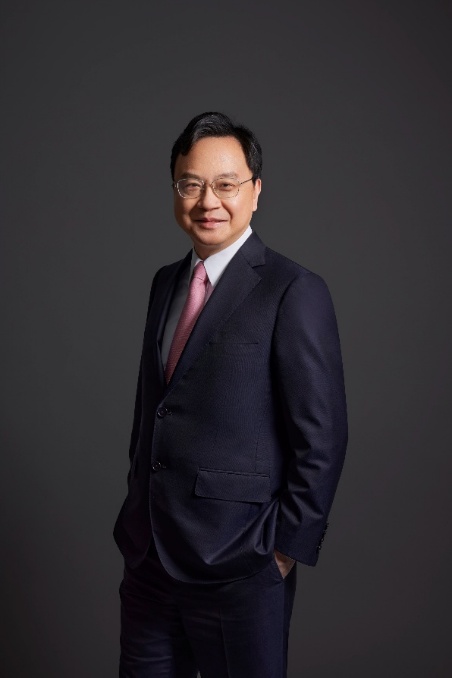
Dennis Lo Yuk-ming
Professor Dennis Lo is the ninth Vice-Chancellor and President of The Chinese University of Hong Kong (CUHK), assuming office on 8 January 2025. Globally recognized as a pioneer in liquid biopsy and widely known as the "father of non-invasive prenatal testing", he also serves as Professor at the Li Ka Shing Faculty of Medicine and a Professor of Chemical Pathology at CUHK.
Professor Lo completed preclinical medical training at the University of Cambridge in 1983 and pursued his clinical training at the University of Oxford, where he later earned both his Doctor of Philosophy and Doctor of Medicine degrees. He joined CUHK in 1997, the same year he reported the presence of cell-free fetal DNA in maternal plasma, a discovery that laid the foundation for non-invasive DNA-based prenatal testing. His development of the non-invasive prenatal test (NIPT) for Down syndrome is regarded as a landmark breakthrough, now adopted in over 100 countries and used by more than 100 million pregnant women worldwide. He has also advanced genome-wide genetic and epigenetic approaches for early cancer detection, propelling liquid biopsy into the era of genome-wide analysis.
Professor Lo’s scientific achievements have earned him numerous international honors. He was elected a Fellow of the Royal Society (2011), an International Member of the U.S. National Academy of Sciences (2013), and a Member of the Chinese Academy of Sciences (2023).
His awards include the King Faisal International Prize for Medicine (2014), the AACC Wallace H. Coulter Lectureship Award (2015), the inaugural Future Science Prize in Life Science (2016), the Fudan-Zhongzhi Science Award (2019), the Breakthrough Prize in Life Sciences (2021), the Royal Medal in Biological Sciences (2021), the Lasker-DeBakey Clinical Medical Research Award (2022), the Jiménez Díaz Lecture Award (2024), and the Richard B. Johnston, Jr., MD Prize in Developmental Biology (2025). He is also a Foreign Member of the Academia Europaea.
Professor Lo is widely regarded as one of the world’s leading biomedical scientists, whose work has fundamentally transformed prenatal testing and cancer diagnostics.
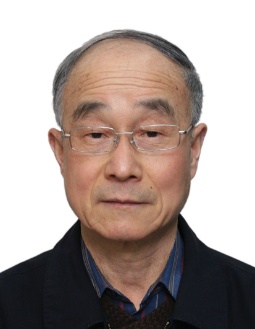
Qian Chengdan
Professor Qian Chengdan is one of China’s most influential scholars in the field of World History. His research spans British and European history, modernization, civilizational exchange and mutual learning, as well as regional and country studies.
Deeply rooted in the Chinese historiographical tradition of “using the past to illuminate the present,” his work combines rigorous academic quality with contemporary relevance. He served as academic director of the influential 12-part documentary The Rise of the Great Powers (2006) and has played a pivotal role in establishing World History as a first-level discipline in China, while more recently promoted the creation of Regional and Country Studies to meet national strategic needs.
Professor Qian has held numerous prestigious academic positions, including Member and Convener of the History Discipline Evaluation Group of the Academic Degrees Committee of the State Council, Member of the National Social Science Fund Review Expert Group, Member of the National Textbook Committee Expert Group, Member of the Social Science Committee of the Ministry of Education, Member of the Yangtze River Scholars Award Program Review Expert Group, and Academic Committee Member of the Chinese Academy of History. Internationally, he is a Corresponding Fellow of the Royal Historical Society (UK) and holds an Honorary Doctor of Letters from Coventry University (UK). Since 2003, he has also served as a distinguished guest professor at the Macau University of Science and Technology.
His major authored works include Between Tradition and Transformation, The Industrial Revolution and the English Working Class, The Lost Paths of Modernization, The First Industrialized Country, The Road to a Modern State, History in Thought, Seeking History from Elsewhere, Professor Qian’s Lectures on Western Civilizations, Professor Qian’s Lectures on the Rise and Fall of the World Powers. He has also served as chief editor of major academic series such as A History of England (6 volumes), A History of the British Empire (8 volumes), The Process of World Modernization (10 volumes), among others.
Since the Sixth Five-Year Plan period, Professor Qian has led dozens of major national research projects and has repeatedly received national-level awards, including the First Prize from the Ministry of Education, the China Publishing Award (provincial and ministerial First Prize), the China Book Award, the Chinese Good Books Award.
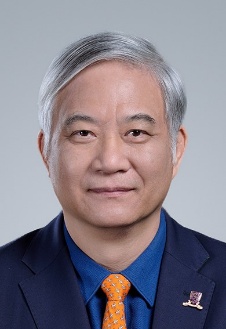
Tang Benzhong
Professor Tang Benzhong is a leading scientist in materials science, macromolecular chemistry, and biomedical theranostics, internationally recognized as the originator of the concept of Aggregation-Induced Emission (AIE). He received his BS from South China University of Technology in 1982 and his PhD from Kyoto University in 1988, followed by postdoctoral research at the University of Toronto (1989-1994). He joined The Hong Kong University of Science and Technology in 1994, was promoted to Chair Professor in 2008, and was elected to the Chinese Academy of Sciences in 2009 and the World Academy of Sciences for the Advancement of Science in Developing Countries in 2020. Since 2021, he has served as Dean of the School of Science and Engineering and X.Q. Deng Presidential Chair Professor at The Chinese University of Hong Kong, Shenzhen.
Professor Tang has published over 2,600 scientific papers with more than 244,000 citations and an h-index of 216. He has delivered over 500 invited talks at international conferences, holds more than 100 patents, and currently serves as Editor-in-Chief of Aggregate (Wiley) while sitting on the editorial boards of over 20 scientific journals.
Recognized as a Highly Cited Researcher in both Chemistry and Materials Science since 2014, Professor Tang has received numerous honors, including the Croucher Senior Research Fellowship Award (2007), the Chinese Chemical Society's Wang Baoren Award for Basic Research in Polymer Science (2007), the 27th Khwarizmi International Science Award (2014) and the National Natural Science Award (First Class, 2017). He has also been honored with the Nano Today International Science Award (2021), the Biomaterials Global Impact Award (2023), the Guangdong Outstanding Contribution Award (2024), and several editorial commendations, including the Outstanding Reviewer Award from Materials Chemistry Frontiers. In 2022, he received the NPY Webinar Certificate. In 2023, he received the Biomaterials Global Impact Award, the NJU-ACS Certificate, the designation of World Leading AI Scientist by the International Artificial Intelligence Industry Alliance, and the CCS–SINOPEC Award (the Chinese Chemical Society).
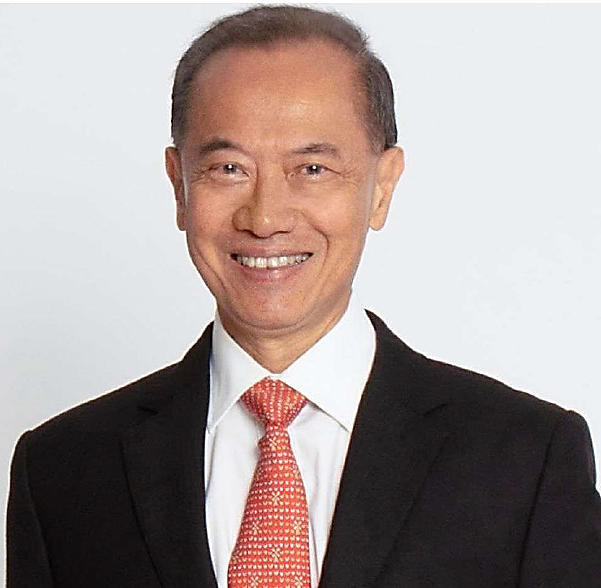
George Yong-Boon YEO
Mr. George Yeo is a Visiting Scholar at the Lee Kuan Yew School of Public Policy, National University of Singapore, and Founding Patron of its Asia Competitiveness Institute. He previously served the Kerry Group in Hong Kong (2012-2021), including as Chairman and Executive Director of Kerry Logistics Network (2012-2019).
From 1988 to 2011, Mr. Yeo held ministerial office in the Singapore Government for 23 years, serving as Minister for Information and the Arts, Minister for Health, Minister for Trade and Industry, and Minister for Foreign Affairs. He began his career in the Singapore Armed Forces, rising to Brigadier-General as Chief-of-Staff of the Air Staff and Director of Joint Operations and Planning in the Ministry of Defense. He holds a BA in Engineering (Double First) from Cambridge University and an MBA (Baker Scholar) from Harvard University.
Mr. Yeo has contributed extensively to international and academic institutions. He was a Member of the Pontifical Commission for Reference on the Economic-Administrative Structure of the Holy See (2013–2014) and of the Vatican Council for the Economy (2014–2020).
He serves on numerous boards and advisory councils, including the Board of Trustees of the Berggruen Institute on Governance, the International Advisory Panel of Peking University, the Senior Advisory Council of the Beijing Forum, the International Advisory Board of IESE Business School, the International Advisory Council of China's Eco Forum Global Guiyang, the International Advisory Board of Japan's National Graduate Institute Policy Studies (GRIPS), the Global Advisory Board of MUFG, the External Advisory Board of the European University Institute’s School of Transnational Governance, the Board of Governors of the Singapore Manufacturing Federation, and the Panel of Experts of the Indonesia Business Council. He also serves as an Independent Non-Executive Director of the AIA Group listed on the Hong Kong Stock Exchange, Pinduoduo listed on NASDAQ, Huawei International Pte Ltd in Singapore, Gurin Energy Group, Salim Group, and Wilmar International Limited.
He was recently appointed Distinguished Nonresident Fellow of the Contemporary China and the World (CCCW) at The University of Hong Kong (HKU), and serves as Advisor and Patron of the Singapore Chinese Physicians' Association (SCPA) and its subsidiaries, the Singapore Chung Hwa Medical Institution (SCHMI) and Singapore College of Traditional Chinese Medicine (SCTCM). Mr. Yeo chaired the Singapore Summit from 2012 to 2016.